A Legacy of Elegance
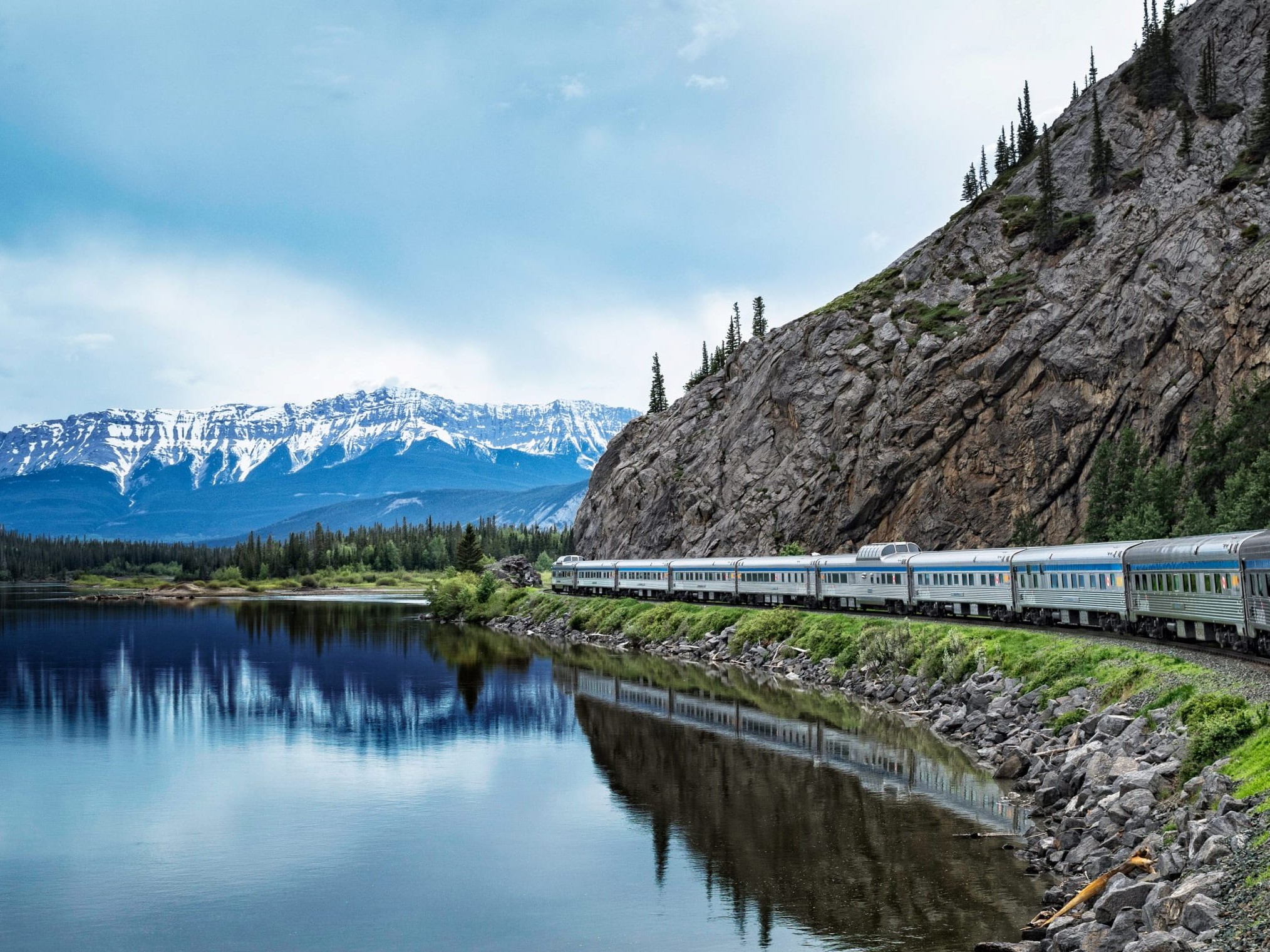
Step into the golden age of travel through Canada’s Grand Railway Hotels. Originally commissioned by Canadian railway companies in the late 19th and early 20th centuries, these architectural marvels were designed to entice elite travelers onto luxury trains and into the heart of Canada’s landscapes. Today, they continue to define Canadian heritage and luxury hospitality, welcoming modern explorers seeking culture, comfort, and connection by rail.


True Canadian Landmarks
Canadian Railroad Hotels

Fairmont Banff Springs Hotel
The Fairmont Banff Springs Hotel is a monumental expression of Scottish baronial architecture, rising from the alpine forest of Banff National Park like a storybook castle. Commissioned by the Canadian Pacific Railway in 1888, it was conceived to lure wealthy rail travelers into the heart of the Canadian Rockies. Designed by architect Bruce Price and later expanded under Walter Painter, the structure draws inspiration from European castles, complete with turrets, limestone facades, and dramatic gables.
Guests arriving by train once stepped into a realm of wilderness luxury, surrounded by mountain peaks, hot springs, and coniferous grandeur. Today, the hotel offers lavish accommodations, a full-service spa, championship golf, and curated outdoor experiences, maintaining its status as a flagship destination on luxury rail itineraries. The Banff Springs Hotel remains a pinnacle of Canadian rail-era hospitality, blending Gothic-revival opulence with the raw beauty of its national park setting.

Fairmont Le Château Frontenac
Crowning the cliffs of Old Québec, the Fairmont Château Frontenac is one of the most iconic examples of the Châteauesque style in North America. Built by the Canadian Pacific Railway beginning in 1893 and expanded well into the 20th century, it was designed by architect Bruce Price to emulate the castles of France’s Loire Valley. With copper-topped turrets, steeply pitched roofs, and an elevated position overlooking the St. Lawrence River, it became a beacon for luxury rail travelers arriving in Québec City. The hotel’s interiors were crafted to impress diplomats, nobility, and high-society guests, featuring marble floors, rich woodwork, and ornate ballrooms.
Today, it remains an essential stop on high-end rail tours of Eastern Canada, offering Michelin-quality dining, historic suites, and direct access to UNESCO-listed landmarks. The Château Frontenac continues to stand as both a symbol of French-Canadian heritage and a cornerstone of luxury rail travel through Québec.
Fairmont Château Lake Louise
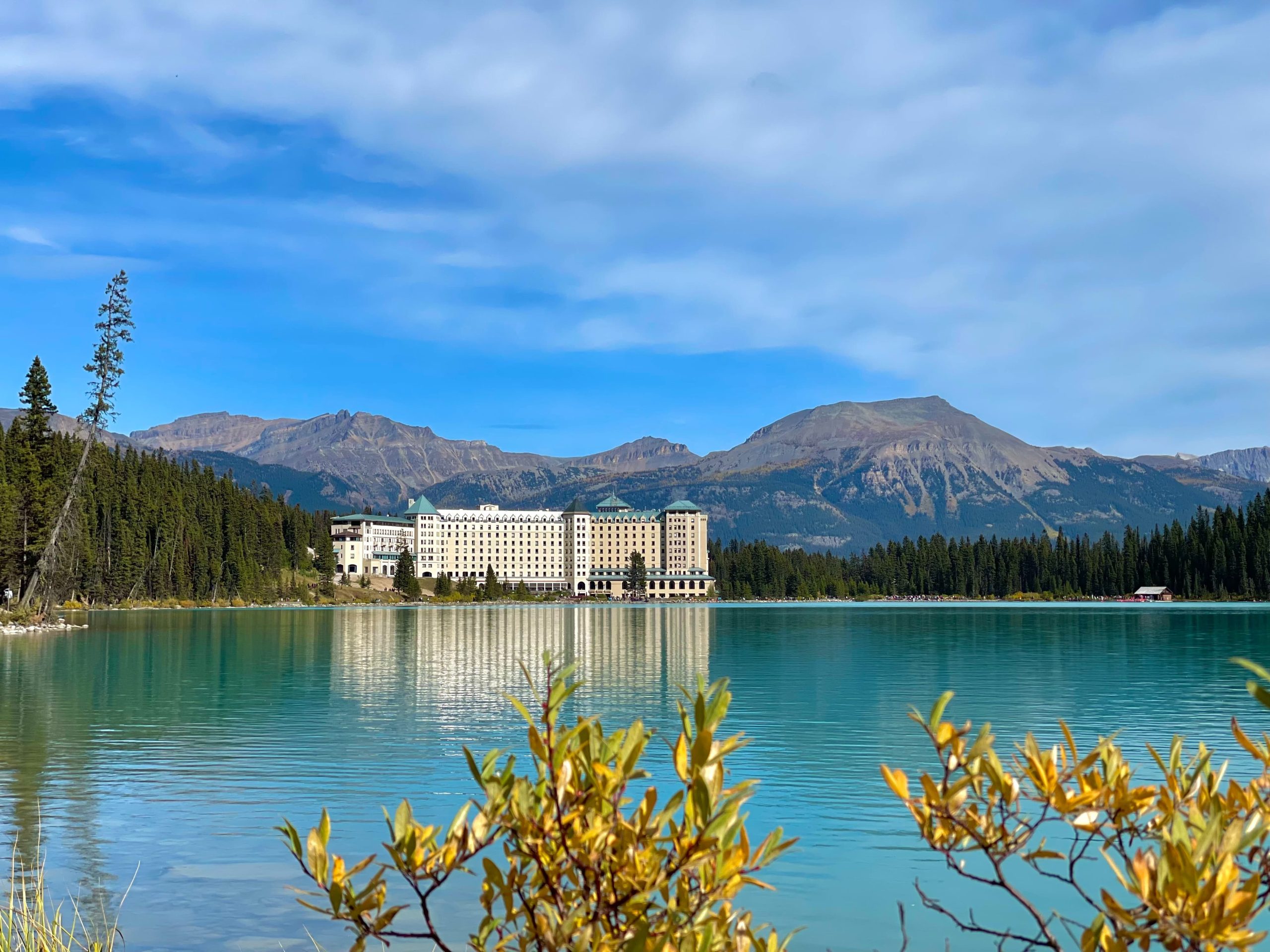
Fairmont Château Lake Louise is an architectural homage to Swiss alpine resorts, designed to integrate natural grandeur with refined elegance. Constructed in stages by the Canadian Pacific Railway starting in 1890, its style blends rustic elements with Châteauesque flourishes, including gabled roofs, sculpted stonework, and ornamental detailing. Set against a backdrop of glacier-fed waters and towering peaks, the hotel was envisioned as a remote sanctuary for rail travelers seeking both exclusivity and immersion in nature.
Its design encourages contemplation of the surrounding landscape, with expansive windows, lakeside terraces, and richly appointed interiors that reflect the spirit of early mountaineering tourism. As a keystone of luxury rail tours through the Rockies, the Château offers personalized service, fine alpine cuisine, and year-round outdoor experiences. It remains one of Canada’s most revered destinations for those traveling by rail in pursuit of natural beauty framed by architectural prestige.

Fairmont Empress
The Fairmont Empress in Victoria is an Edwardian masterpiece that exemplifies the imperial ambitions of Canada’s early railway expansion. Commissioned by the Canadian Pacific Railway and opened in 1908, it was designed by Francis Rattenbury in a style that combines British classicism with Châteauesque features. With its grand façade covered in ivy, corner turrets, and a wide veranda facing the harbor, The Empress was built to attract rail and steamship travelers at the height of luxury tourism’s golden age. Its interiors feature high ceilings, stained glass, and detailed millwork, reflecting the elegance expected by international guests.
Famous for its afternoon tea and regal ambiance, the hotel continues to serve as a cultural touchpoint for visitors arriving via luxury rail-and-cruise itineraries. Positioned as the crown jewel of Vancouver Island, The Empress offers premium experiences that harmonize coastal beauty, architectural legacy, and railway history.
Fairmont Château Laurier
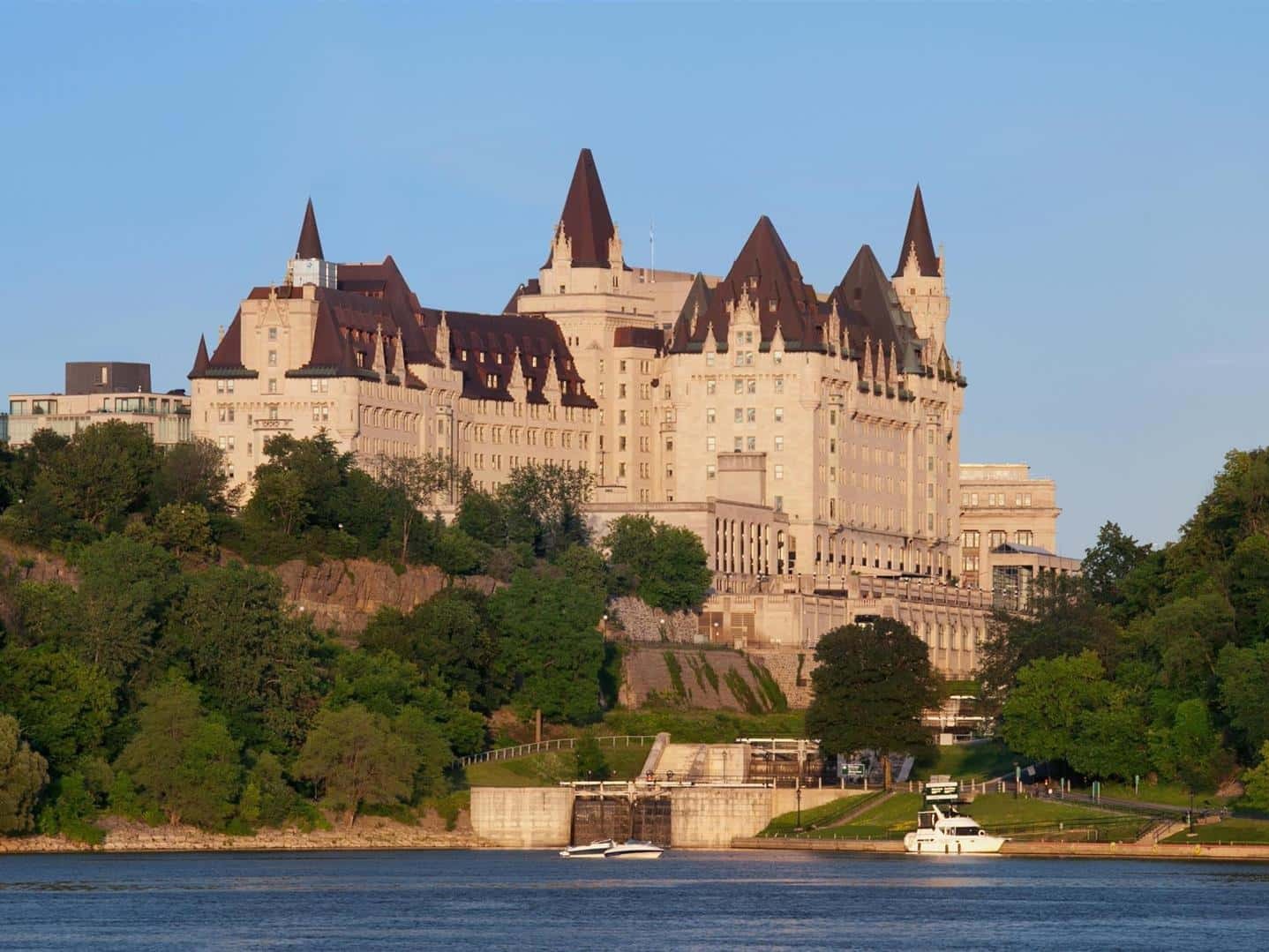
Standing guard over the Rideau Canal and Parliament Hill, the Fairmont Château Laurier is a landmark of French Gothic Revival architecture and a statement of national pride. Built by the Grand Trunk Railway in 1912, the hotel’s commanding limestone façade, ornate dormers, and distinctive turrets were modeled after the great French châteaux. Designed by Ross and MacFarlane, the property was meant to embody sophistication and permanence at the political heart of Canada. Its interiors are defined by marble staircases, hand-carved wood, and period furnishings that reflect early 20th-century opulence.
Directly adjacent to Ottawa’s historic Union Station, it served as a convenient and luxurious base for train travelers arriving to witness Canada’s evolving identity. Today, the Château Laurier continues to offer refined accommodations and proximity to national institutions, making it a cornerstone of luxury rail travel through Canada’s capital region.

The Fort Garry Hotel
The Fort Garry Hotel in Winnipeg is one of Canada’s prominent examples of Beaux-Arts classicism adapted for railway luxury. Commissioned by the Grand Trunk Pacific Railway and opened in 1913, it was designed by the firm Ross and MacFarlane, whose signature style includes sculpted facades, high mansard roofs, and opulent detailing. Located near Union Station, the hotel served as a welcome for guests arriving by train into the heart of the Prairies. Its interiors featured sweeping staircases, ballrooms, and appointed suites that catered to royalty, artists, and political leaders throughout the 20th century.
Today, the Fort Garry retains its legacy through elegant accommodations, heritage cuisine, and wellness experiences housed within its storied walls. As a key destination on luxury rail tours crossing central Canada, the hotel offers an immersive blend of history, architectural richness, and metropolitan sophistication in downtown Winnipeg.

Fairmont Palliser
The Fairmont Palliser in Calgary is a defining example of Edwardian commercial architecture, designed to convey confidence and refinement on the Western frontier. Opened in 1914 by the Canadian Pacific Railway, the building was designed by E. and W.S. Maxwell to complement the urban sophistication emerging in early 20th-century Alberta. With its sandstone base, Corinthian columns, and pronounced cornices, The Palliser projected permanence in a rapidly growing city. Its interior featured ballrooms, fine dining salons, and modern amenities aimed at well-heeled rail passengers disembarking at the nearby station, also making it a natural gathering point for both society events and railway travelers.
As a hub on luxury rail tours through Western Canada, the hotel provides a seamless connection between city life and onward journeys into the Rockies. With a heritage of distinguished service and meticulously restored public spaces, The Palliser remains an ideal setting for travelers seeking elegance and historical context in the Canadian West.
Fairmont Hotel Macdonald
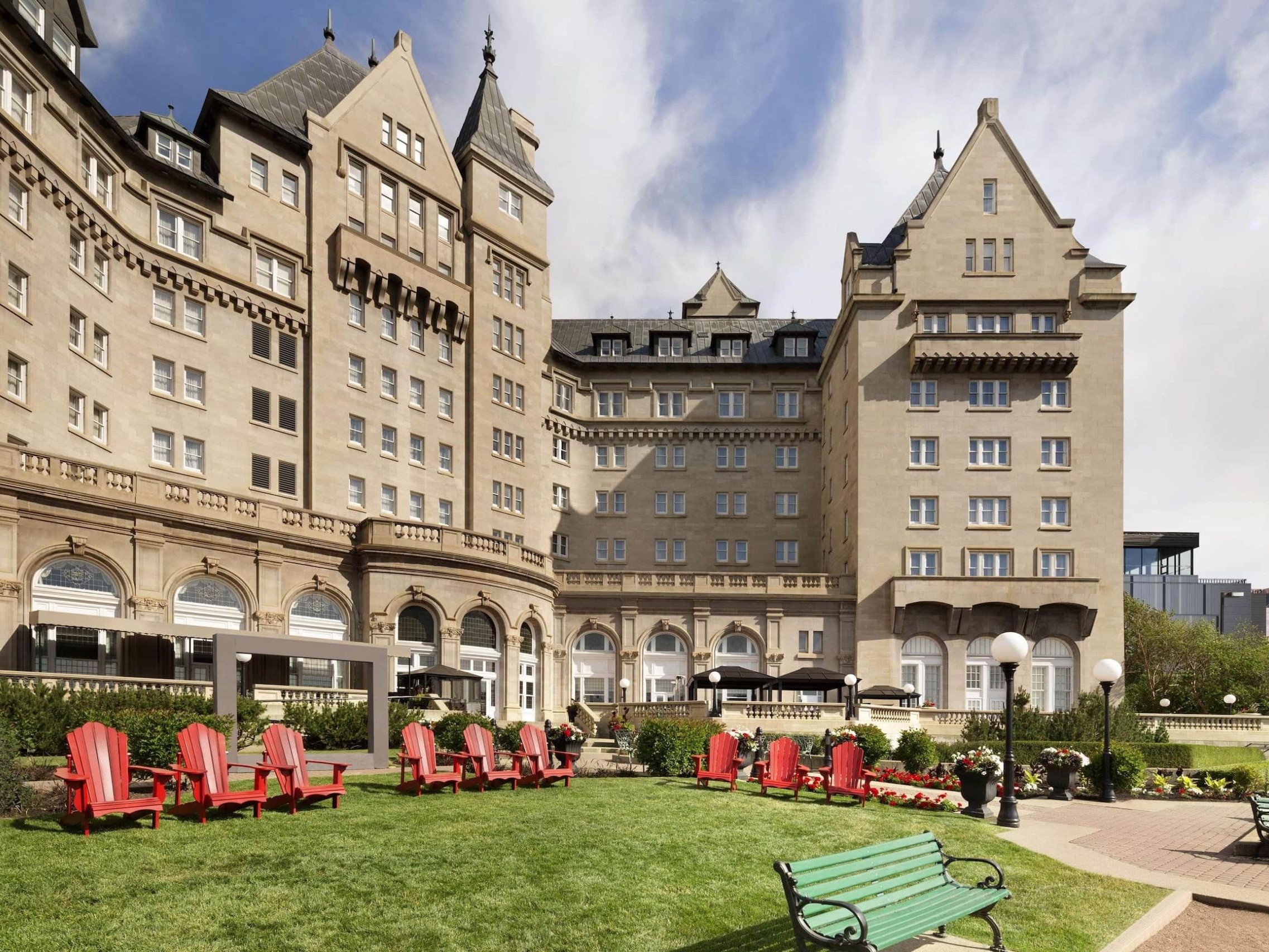
The Fairmont Hotel Macdonald in Edmonton is a monumental expression of the Châteauesque tradition, designed by Ross and MacFarlane and opened in 1915 under the Grand Trunk Pacific Railway. With its copper roofs, stone towers, and symmetrical wings, the hotel evokes a regal European estate set against the wild backdrop of northern Alberta. Constructed on a bluff overlooking the North Saskatchewan River, it was intended as both a symbol of railway prestige and a luxurious frontier outpost. Inside, its vaulted ceilings, crystal chandeliers, and original woodwork reveal the meticulous care taken to impress guests arriving by train. Its elevated position offered passengers an unforgettable first impression of Alberta’s capital.
Today, Hotel Macdonald offers luxury accommodations, sweeping river valley views, and a link to Edmonton’s historical core. For travelers on curated rail itineraries, it stands as both a cultural landmark and a testament to the grandeur that once defined Canadian transcontinental rail travel.

Fairmont Jasper Park Lodge
Fairmont Jasper Park Lodge is a rare example of rustic luxury, conceived in the 1920s by the Canadian National Railway as a lakeside retreat for elite travelers crossing the Rockies. Unlike the stone grandeur of other railway hotels, its architecture embraces a low-profile lodge aesthetic, built from timber and natural materials to harmonize with the setting. Initially a collection of luxury tent cabins, it evolved into a series of handcrafted log buildings surrounding Lac Beauvert. Its secluded location was deliberately chosen to showcase the untouched beauty of Jasper National Park.
The property combines a casual elegance with pristine wilderness, offering high-end amenities, a championship golf course, and access to iconic trails and wildlife. Train passengers arriving at Jasper Station find in the lodge a peaceful contrast to the formal grandeur of urban hotels. As a signature stop on luxury rail tours through Jasper National Park, it delivers tranquility, heritage, and immersive mountain beauty wrapped in warm Canadian hospitality.

Fairmont Royal York
Toronto’s Fairmont Royal York is a towering testament to Art Deco refinement and the golden age of railway travel. Designed by Ross and Macdonald and completed in 1929 for the Canadian Pacific Railway, the 28-story structure was, at the time, the tallest building in the British Empire. With its limestone cladding, Gothic ornamentation, and commanding setbacks, the hotel presents a dramatic profile across from Union Station. Inside, it boasts vaulted ceilings, opulent ballrooms, and historic suites that have hosted monarchs, dignitaries, and Hollywood icons.
The Royal York was designed to offer seamless luxury for rail passengers, with underground walkways connecting directly to the station. Today, it remains one of the most prominent destinations on luxury train journeys through Eastern Canada, offering sophisticated dining, world-class service, and proximity to the best of downtown Toronto.

Westin Nova Scotian
The Westin Nova Scotian in Halifax was opened in 1930 by Canadian National Railways as a modern, coastal interpretation of railway hotel luxury. Positioned at the terminus of one of Canada’s most storied rail lines, its clean brick façade and Georgian Revival elements offered a refined welcome to travelers arriving at the eastern edge of the continent. Originally connected to Halifax’s train terminal by a glass-enclosed walkway, the hotel catered to transatlantic passengers and dignitaries crossing the country by rail. Its interiors combined nautical influences with classic design, providing comfort and sophistication near the bustling harbor.
Today, The Nova Scotian continues to serve as a gateway to Atlantic Canada, offering elegant accommodations and access to the region’s cultural and culinary attractions. For luxury rail passengers concluding a cross-country journey, it represents the culmination of a truly coast-to-coast Canadian experience.

Delta Hotels Bessborough
The Delta Bessborough in Saskatoon stands as a striking testament to the Châteauesque architectural tradition that defined Canada's grand railway hotels. Designed by Archibald and Schofield and opened in 1935 by Canadian National Railways, the hotel features steep pitched roofs, dormer windows, and carved stone details that evoke the romanticism of medieval Europe. Positioned along the South Saskatchewan River, the Bessborough was built to symbolize civic optimism during the Great Depression and to serve as a luxurious stop for transcontinental rail travelers crossing the Prairies.
Its lush gardens, elegant interiors, and riverfront location create a serene environment for visitors seeking both heritage and comfort. Today, the hotel is a signature highlight on high-end rail journeys through Saskatchewan, offering refined accommodations, curated dining, and a connection to the cultural rhythm of Saskatoon.
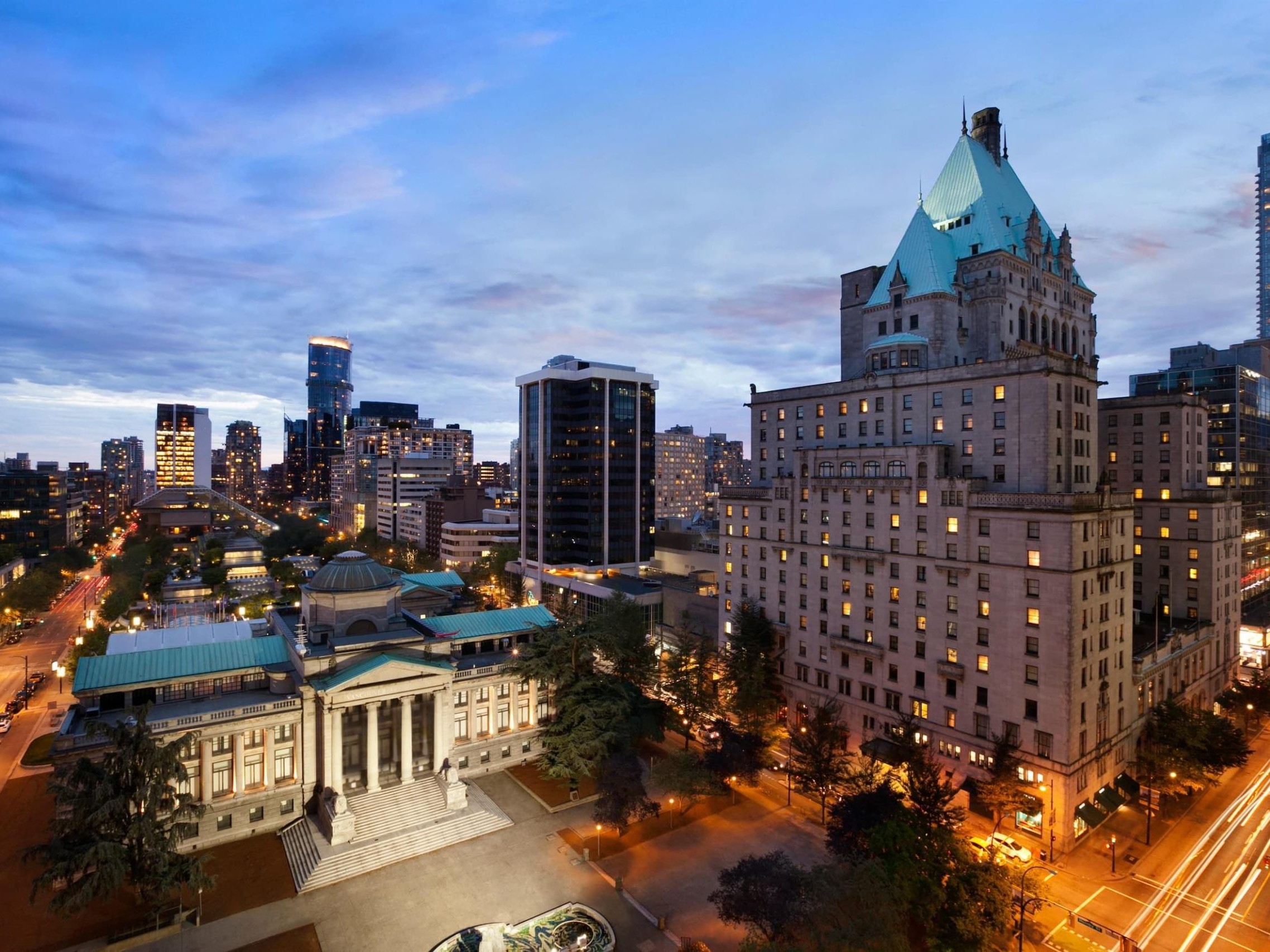
Fairmont Hotel Vancouver
Fairmont Hotel Vancouver, completed in 1939, is an architectural fusion of Châteauesque design and emerging modernist influences, reflecting the ambition of Canada’s railway builders. A joint project of the Canadian Pacific and Canadian National railways, it was intended as a West Coast crown jewel, featuring steep copper roofs and stone masonry. Located in the heart of downtown Vancouver, the hotel welcomed travelers arriving at nearby Pacific Central Station with interiors showcasing rich wood paneling, crystal chandeliers, and murals celebrating Canadian history.
As a departure or arrival point on luxury rail tours through the Rockies, Hotel Vancouver offers exceptional convenience, heritage ambiance, and contemporary amenities. With panoramic city views and proximity to the harbor, museums, and galleries, it continues to serve as a grand introduction to Western Canada’s culture and natural beauty.

Fairmont The Queen Elizabeth
Opened in 1958 atop Montréal’s Central Station, The Fairmont Queen Elizabeth represents mid-century modern luxury within the framework of Canada’s railway legacy. Designed by the firm Ross and Macdonald with a focus on clean lines and contemporary elegance, it marked a new era for railway hotels, one that embraced efficiency and urban sophistication. With direct access to the train platforms below, it offered seamless transitions for rail passengers traveling between cities. Inside, the hotel features spacious lounges, expansive meeting rooms, and historic suites including the one made famous by John Lennon’s 1969 Bed-In for Peace.
Today, The Queen Elizabeth remains a landmark of Montréal’s skyline, offering refined accommodations, gourmet dining, and integrated access to VIA Rail and luxury tour services. For travelers on high-end rail journeys, it blends modernity with heritage at the heart of French Canada’s cultural capital.

Marriott Château Champlain
The Marriott Château Champlain in Montréal is a modern interpretation of the classic railway hotel concept, combining mid-century innovation with timeless elegance. Designed by Québec architects Roger D'Astous and Jean-Paul Pothier, and opened in 1967 in preparation for Expo 67, the hotel’s distinctive arched windows and sleek vertical lines evoke a blend of Romanesque revival and International Style architecture. Built adjacent to Montréal’s Central Station, it served as a continuation of Canada’s railway hospitality tradition, linking the city’s downtown with national and international rail routes. Its design was intended to reflect the optimism and progress of the era, with panoramic views, expansive interiors, and luxurious amenities.
Today, the hotel continues to host luxury rail guests arriving in Montréal, offering refined service, modern comfort, and proximity to the city’s historic, cultural, and culinary landmarks.
Tours Featuring Grand Railway Hotels